Introduction
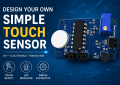
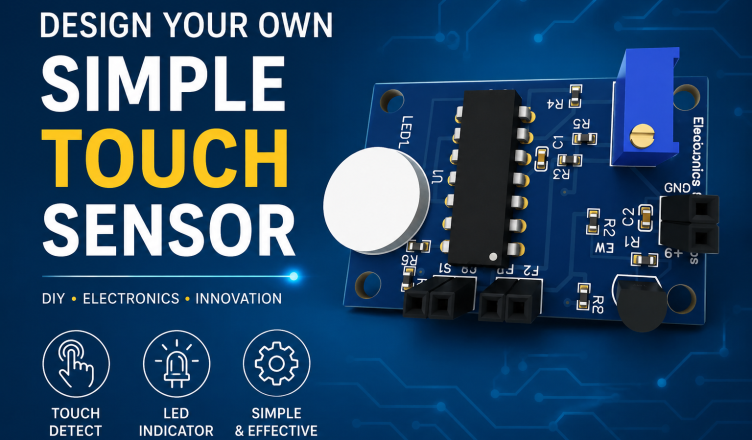
Touch sensors have become an essential part of modern electronic devices, replacing traditional mechanical switches in many applications. In this project, we will design a simple touch sensor using the LM324 operational amplifier. The circuit is inexpensive, easy to build, and perfect for beginners learning analog electronics and PCB design.
Whether you’re an electronics student, hobbyist, or DIY maker, this project helps you understand how touch sensing works using an operational amplifier instead of dedicated touch sensor ICs.
What is a Touch Sensor?
A touch sensor is an electronic circuit that detects the presence of a human finger by sensing tiny electrical changes. Unlike push buttons, touch sensors require no mechanical movement, making them more reliable and longer lasting.
Touch sensors are commonly found in:
- Home automation systems
- LED touch lamps
- Smart switches
- Consumer electronics
- Industrial control panels
- DIY electronic projects
LM324 Pin Layout
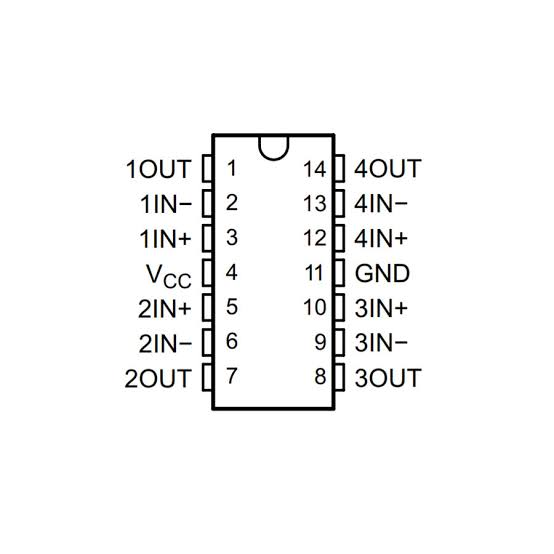
The LM324 is a 14-pin quad operational amplifier (Op-Amp) IC that contains four independent op-amps within a single package, making it ideal for a wide range of analog applications such as amplifiers, comparators, filters, oscillators, and sensor circuits. The IC is powered through Pin 4 (VCC) and Pin 11 (GND), while the remaining pins are divided into four identical amplifier sections. The first op-amp uses Pins 1 (Output), 2 (Inverting Input), and 3 (Non-inverting Input), the second uses Pins 5 (Non-inverting Input), 6 (Inverting Input), and 7 (Output), the third uses Pins 8 (Output), 9 (Inverting Input), and 10 (Non-inverting Input), and the fourth uses Pins 12 (Non-inverting Input), 13 (Inverting Input), and 14 (Output). Each operational amplifier functions independently, allowing multiple analog operations to be performed simultaneously within the same IC while operating from a single supply voltage ranging from 3 V to 32 V, making the LM324 a compact, economical, and highly versatile choice for electronic circuit design.
Why Use LM324?
The LM324 is one of the most popular quad operational amplifier ICs available. It operates from a single power supply and is widely used in comparator and signal conditioning circuits.
Advantages of LM324
- Low cost
- Easily available
- Operates from 3V to 32V
- Contains four op-amps in one package
- Low power consumption
- Ideal for comparator circuits
- Beginner-friendly
Project Features
- Simple circuit design
- Low component count
- Uses readily available components
- LED indication when touch is detected
- Single supply operation
- Easy PCB fabrication
- Suitable for educational projects
PCB Manufacturer
PCBWAY is a highly skilled company specializing in PCB manufacturing. They offer their services at incredibly low prices, such as providing 10 PCBs for only $5. Additionally, new members receive a $5 bonus. The website allows customers to upload their Gerber Files and place orders.

PCBWAY is known for producing PCBs of exceptional quality and maintaining high standards, which is why many people trust them for their PCB and PCBA needs.
Below are some of my PCB’S manufactured by PCBWAY and I am fully satisfied by their Quality of service they provide
Circuit Working Principle
The LM324-based touch sensor circuit uses the four operational amplifiers inside the LM324 IC to detect the tiny electrical signal produced when a user touches the sensor pad. The circuit is powered from a +9 V supply connected through header H2, while the 2N3906 PNP transistor (Q1), together with R1, R2, C1, and C2, provides a filtered and stable reference voltage for the sensing stage. The touch electrodes are connected through headers H1 (Force lines) and H3 (Sense lines). The first two op-amps (U1.1 and U1.2) amplify the extremely small signal generated by the touch sensor and compare it against an adjustable threshold. Potentiometer RP1 (100 kΩ) allows the sensitivity of the touch sensor to be adjusted, while resistors R7 and R8 provide biasing and enable the circuit to operate with either a two-wire or four-wire touch sensor configuration. The outputs of these stages are then processed by U1.3 and U1.4, which act as comparators to produce a clean digital output that drives the red/green LED (LED1) through resistor R6, indicating when a touch has been detected.
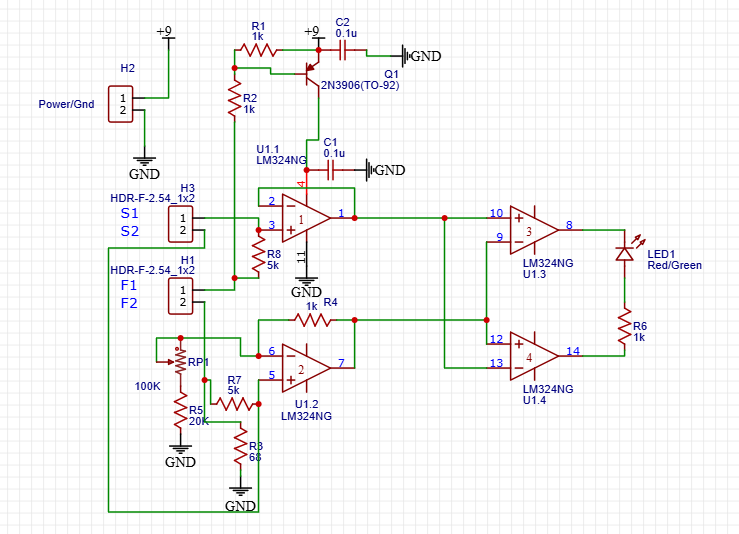
The notes included in the schematic explain the sensor connections and configuration options. “Potentiometer RP1 is used to adjust sensitivity.” “Header H1 connects to the sensor’s two ‘force’ lines.” “Header H2 connects to the sensor’s two optional ‘Sense’ lines.” “R7 and R8 permit a two-line sensor configuration, but it then is sensitive to the series resistance of the force lines.” For improved accuracy, the circuit supports a 4-wire configuration, where “connect F1 and S1 to magnetic contact #1, and F2 + S2 are connected to magnetic contact #2.” Alternatively, for a simpler 2-wire sensor setup, “just connect F1 to one of the magnetic contacts and F2 to the other.” This flexibility allows the circuit to be used with different sensor arrangements while maintaining reliable touch detection, making it suitable for DIY electronics projects, control panels, and educational demonstrations.
PCB Files
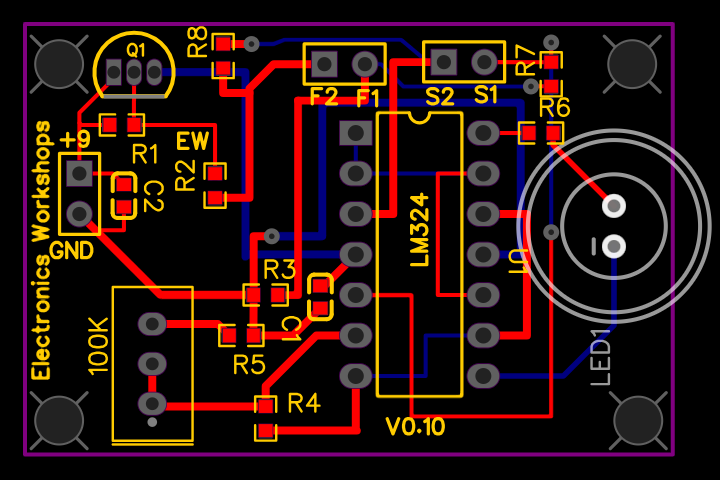
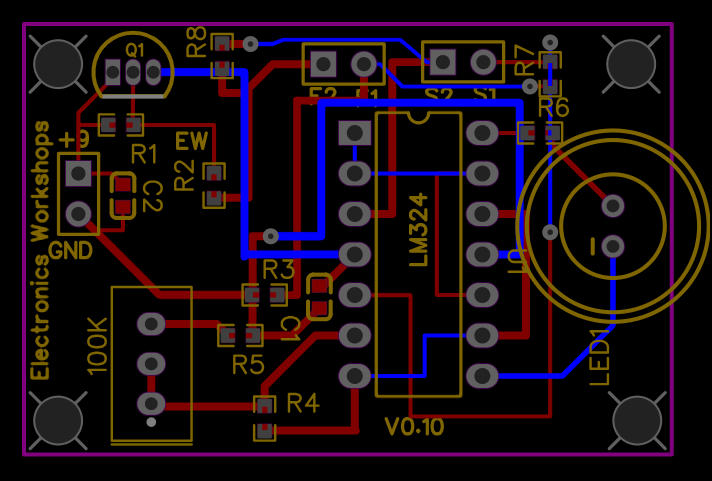
3D files
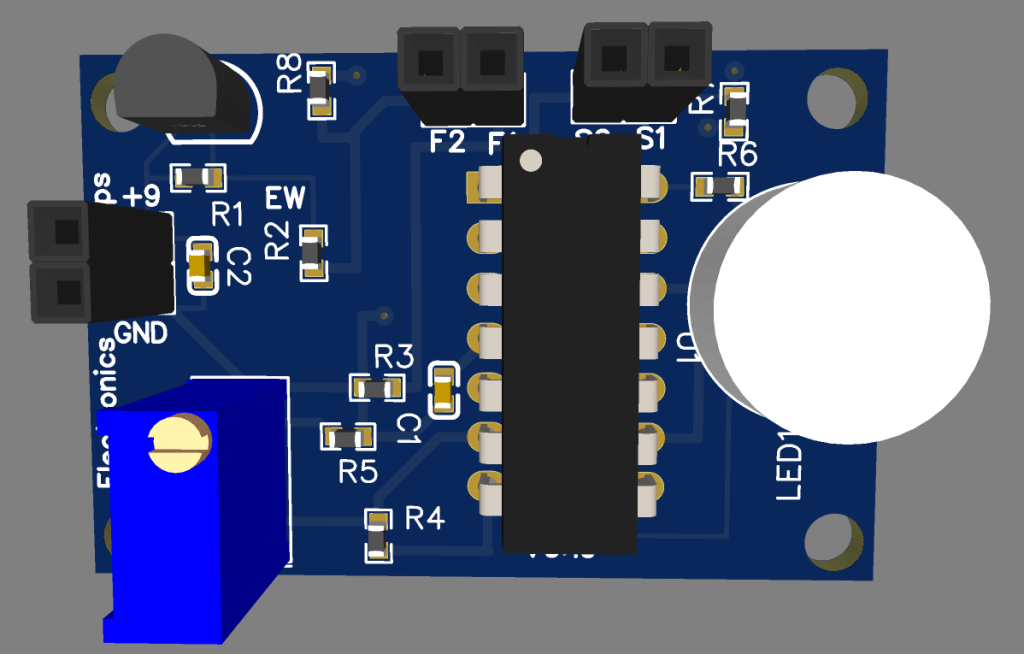
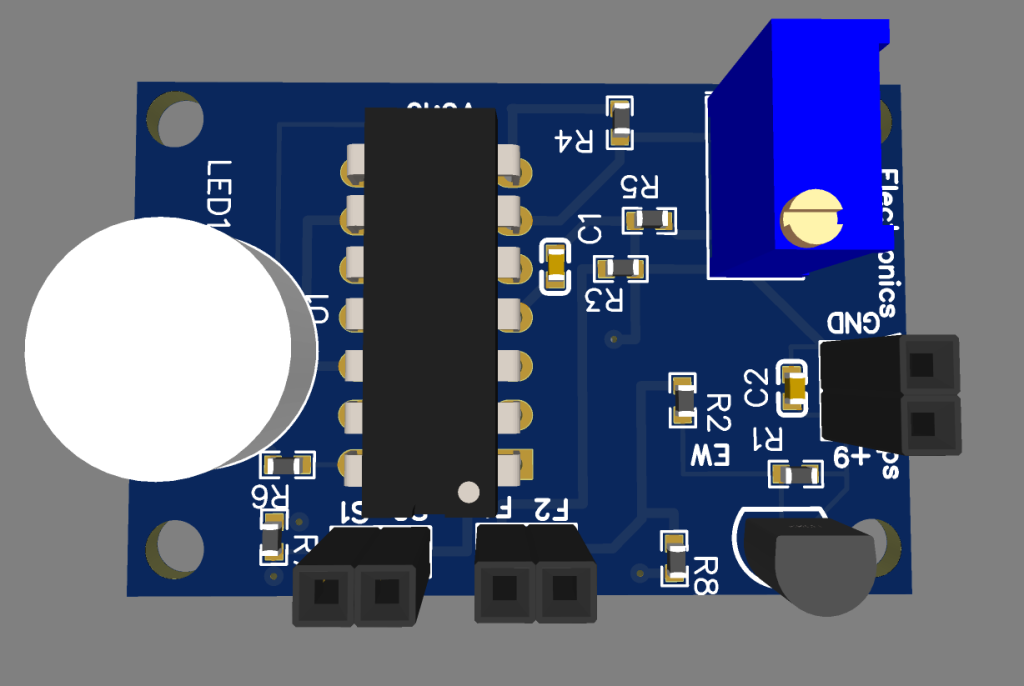
Manufacturing Files
Gerber
Pick And Place
Bill Of materials
Order Directly from PCB WAY
I have already uploaded all these required manufacturing files in PCBWAY website. You can easily go to the below link and place you order, and get your Own Home Automation PCB manufactured from one of the best pcb manufacturer PCBWAY
Applications
This LM324 touch sensor can be used in:
- Touch-operated lamps
- Doorbell circuits
- Smart switches
- Home automation
- Educational electronics kits
- Robotics projects
- Alarm systems
- DIY gadgets
- Electronic toys
- Prototype development
Conclusion
Designing a simple touch sensor using the LM324 is an excellent beginner electronics project that demonstrates how operational amplifiers can detect extremely small electrical signals generated by human touch. The circuit is inexpensive, reliable, and easy to assemble, making it suitable for students, hobbyists, and anyone interested in analog electronics.
Once built, this touch sensor can serve as the foundation for more advanced projects such as touch-controlled lighting systems, smart home devices, security systems, and automation applications.
Frequently Asked Questions (FAQs)
1. Can I use 5V to power the LM324 touch sensor?
Yes. The circuit works reliably with a 5V DC supply and can also operate up to 12V.
2. Why is the LM324 suitable for this project?
The LM324 has high input impedance, low power consumption, and four operational amplifiers in one IC, making it ideal for touch detection.
3. Does this circuit require programming?
No. This is a fully analog circuit and requires no microcontroller or software.
4. Can I control a relay using this touch sensor?
Yes. By adding a transistor or relay driver stage, the output can switch larger loads.
5. Is this project suitable for beginners?
Absolutely. It uses common components, has a straightforward design, and is a great introduction to analog electronics.